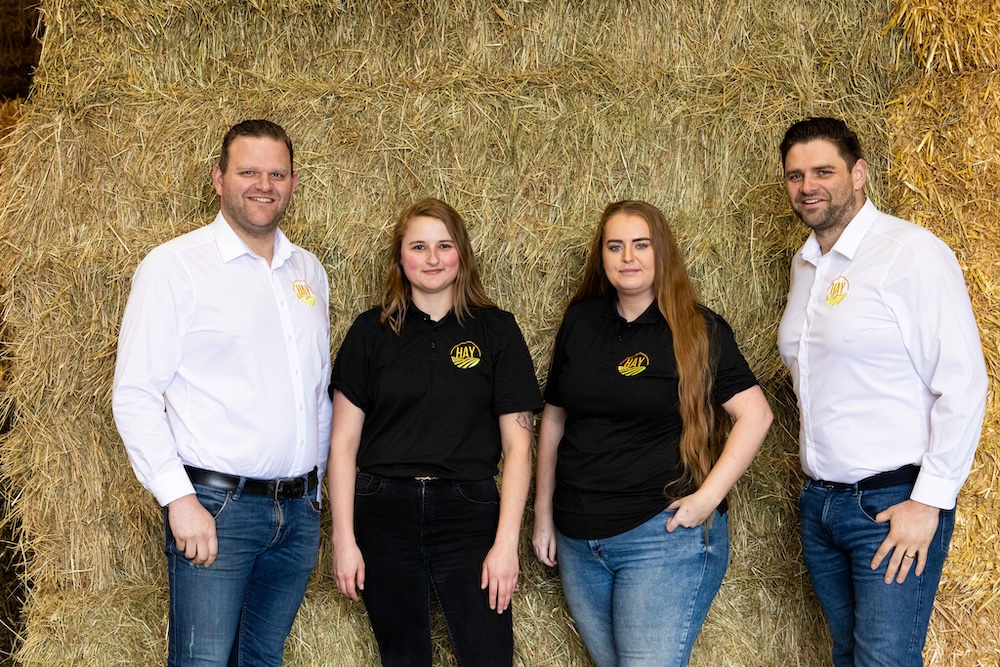


Having hay analysed is more popular than ever. Demand for hay with specific characteristics has grown. Horse owners are paying closer attention to what they feed their animals. And that has also sparked the search for the ‘golden’ hay. Hay to You is the first company to have every batch of hay analysed before it is sold. Only then can customers know exactly what they're feeding their animals. A real benefit for many horse owners! To make a well-informed choice, it helps to understand how hay is analysed, what the different approaches are and what to look out for. Robin explains.
Understanding an average hay analysis
Many hay suppliers offer hay with an analysis. By far the majority use an ‘average analysis’. This means combining the results from several different batches and calculating an average. Of course, those figures don't tell you anything about the specific batch you'll receive. Its values may be higher or lower in different areas. That's not necessarily a problem if you aren't particularly concerned about the exact values and your animals don't have specific nutritional needs. But if you have a horse with particular dietary requirements, an allergy or, for example, insulin resistance, you want to know in advance that you're getting low-sugar hay. If you buy hay based on an average analysis, you can never be sure that the forage you're actually feeding your horse is low in sugar. You still don't know exactly what your animal is eating.
Forage with a batch-specific analysis
Want to know what your animal is eating? Then choose a batch that has been analysed individually. The supply of analysed hay is relatively limited, and analysed batches are often quite expensive, especially low-sugar hay. There are several reasons for this: low-sugar hay is scarce, and offering it is also a challenge for suppliers.
Why is low-sugar hay so scarce?
We're all looking for something that's in short supply: low-sugar hay. Why is there so little of it? Due to climate change, excessive fertilisation and various other factors, we're seeing more and more hay with a high sugar content. Suppliers of analysed hay don't offer batches with such high sugar levels. After all, there's no point: nobody is looking for them, and those levels are undesirable. Suppliers who sell hay based on average values include such batches in their overall stock. And if you happen to receive one, you're simply unlucky.
Hay batches that can't be sold after analysis
At Hay to You, we analyse every batch separately. And the results often show that many batches aren't suitable for horses. So how can we still make this work? One major advantage is that Hay to You is part of a large parent company that trades substantial quantities of hay and straw. This allows us to pick out the finest batches for Hay to You. Only the real gems make it into our webshop.
The logistical challenge of analysed hay
Selling hay with a batch-specific analysis also involves important logistical considerations. It starts with collecting the different batches, all of which must be stored separately. That's naturally very inefficient. Every batch is analysed individually, and by the time the results come back, the hay has often already been in storage for a week. We then find that 70 to 80% of the batches aren't suitable for our customers. We remove them from storage again, even though they've been taking up space for nothing. So before we list even one batch in our webshop, we've already collected, analysed and removed many others. After that, we have to keep the selected batch separate until every last bale has been delivered. This is a logistical challenge, especially on a large scale. And it immediately explains why hay with a batch-specific analysis is more expensive than hay sold with an average analysis.
Do you need to know what your animal is eating?
Ultimately, it's up to you as a customer to decide what suits you best. There's no right or wrong answer. If you've been feeding hay with an average analysis, or no analysis at all, for years without any problems, there's no reason to panic. But if your animal has nutrition-related problems, such as being overweight, swollen legs, a hard crest or insulin resistance, it's worth looking into analysed hay. You can then feed hay that's much better suited to your animal.
Do you have questions about this article or our products? Please get in touch. We're always happy to discuss your situation and help you find a suitable solution.